
How to Automate Complex Business Processes for Maximum Efficiency sets the stage for this enthralling narrative, offering readers a glimpse into a story that is rich in detail and brimming with originality from the outset.
The following paragraphs will delve into the intricacies of automating complex business processes, providing valuable insights and practical tips for maximizing efficiency.
Understanding Complex Business Processes
Complex business processes refer to intricate workflows or systems within an organization that involve multiple steps, decision points, and stakeholders. These processes often require significant coordination and resources to execute efficiently.
Automating complex business processes is crucial for maximizing efficiency and productivity. By implementing automation tools, organizations can reduce manual errors, streamline operations, and free up employees to focus on more strategic tasks.
Common Challenges Faced When Automating Complex Processes
- Lack of Standardization: Complex processes may lack standardized procedures, making it difficult to automate effectively.
- Data Integration Issues: Integrating data from multiple sources can be challenging and may lead to errors in the automation process.
- Resistance to Change: Employees may resist automation initiatives due to fear of job displacement or unfamiliarity with new technologies.
- Complex Decision Making: Automating processes that involve complex decision-making algorithms or human judgment can be particularly challenging.
- Regulatory Compliance: Ensuring that automated processes comply with industry regulations and standards can pose a significant challenge.
Identifying Key Business Processes for Automation
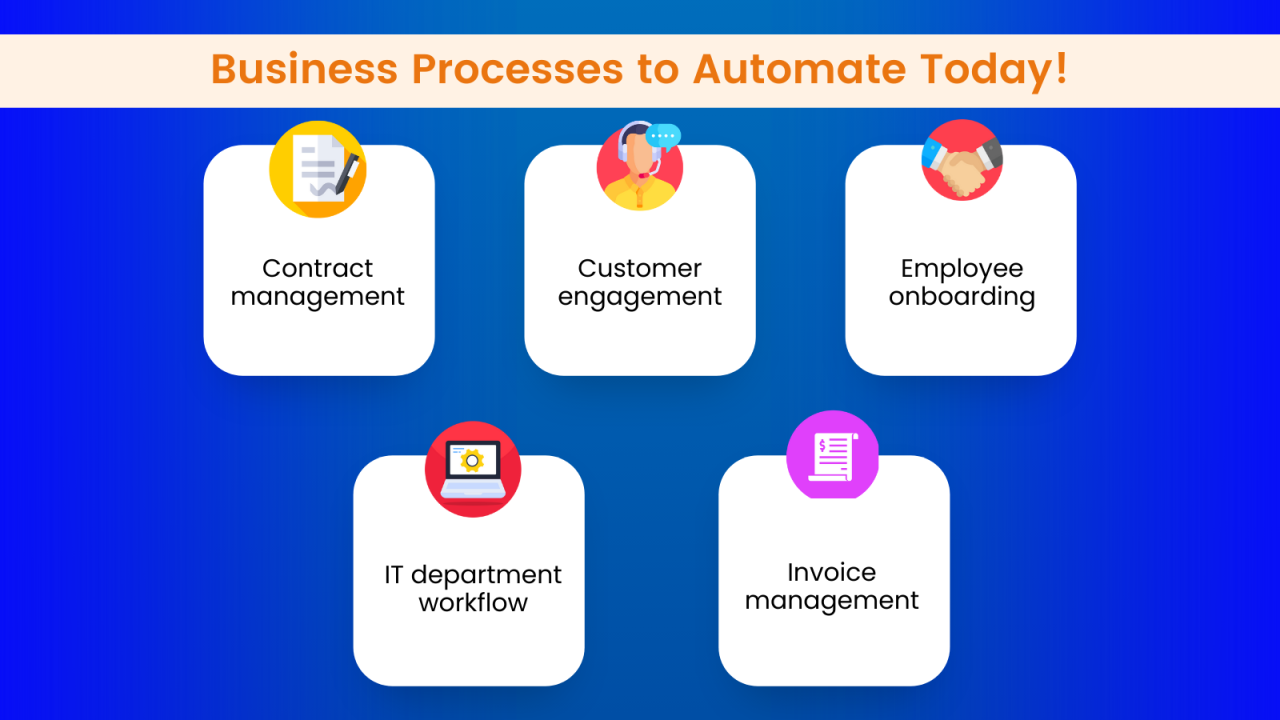 When considering automation of complex business processes, it is crucial to identify which processes are best suited for this transformation. By selecting the right processes, organizations can maximize efficiency gains and streamline operations.
Methods for Identifying Processes to Automate
- Conduct a thorough analysis of existing workflows and processes to identify repetitive tasks that can be automated.
- Consider the impact of automation on overall productivity, cost reduction, and resource optimization.
- Consult with key stakeholders and employees who are directly involved in the processes to gather insights and feedback.
- Utilize process mapping techniques to visualize the flow of activities and identify bottlenecks that can be eliminated through automation.
Examples of Complex Business Processes Suitable for Automation
- Invoice processing and accounts payable/receivable management.
- Inventory management and supply chain optimization.
- Customer relationship management (CRM) and sales pipeline management.
- Human resources processes such as recruitment, onboarding, and performance management.
Criteria for Selecting Processes with the Highest Potential for Efficiency Gains
- Complexity and volume of tasks involved in the process.
- Frequency of occurrence and repetitive nature of the tasks.
- Impact on overall business operations and strategic objectives.
- Potential for cost reduction, time savings, and resource optimization.
Tools and Technologies for Automation
Automation of complex business processes is made possible through a variety of tools and technologies that streamline operations, increase efficiency, and reduce human errors. Let's explore some popular options and compare their pros and cons.Robotic Process Automation (RPA)
- Pros:
- Quick implementation with minimal IT involvement
- Ability to work across multiple systems and applications
- Reduces manual errors and improves accuracy
- Cons:
- Limited cognitive abilities compared to AI
- Requires structured data and rule-based processes
- May not handle exceptions well
Business Process Management (BPM) Software
- Pros:
- End-to-end visibility and control over processes
- Support for process modeling and optimization
- Integration with other enterprise systems
- Cons:
- Steep learning curve for complex implementations
- Customization and scalability challenges
- Dependency on IT for changes and updates
Artificial Intelligence (AI) and Machine Learning
- Pros:
- Ability to handle unstructured data and complex tasks
- Continuous learning and improvement over time
- Enhanced decision-making capabilities
- Cons:
- High initial investment and resource requirements
- Data privacy and security concerns
- Potential bias in algorithms and decision-making
Implementing Automation Solutions
Implementing automation solutions in complex business processes requires a strategic approach to ensure seamless integration and maximum efficiency. By following a step-by-step process and focusing on testing and refining automated processes, businesses can optimize their operations and achieve greater productivity.Step-by-Step Process for Implementing Automation
- Assess Current Processes: Begin by evaluating existing processes to identify areas that can benefit from automation.
- Set Clear Objectives: Define specific goals and outcomes for the automation project to guide implementation.
- Select the Right Tools: Choose automation tools and technologies that align with the unique needs of the business.
- Develop a Detailed Plan: Create a comprehensive plan outlining the implementation timeline, resource requirements, and key milestones.
- Implement in Phases: Roll out automation in phases to minimize disruptions and monitor progress effectively.
Tips for Integrating Automation Seamlessly
- Train Employees: Provide training and support to employees to ensure a smooth transition to automated processes.
- Collaborate Across Teams: Foster collaboration between different departments to streamline automation implementation.
- Monitor Performance: Regularly monitor the performance of automated processes and make adjustments as needed.
Importance of Testing and Refining Automated Processes
Automated processes should undergo rigorous testing to identify any issues or inefficiencies that may arise. By continuously refining and optimizing automated workflows, businesses can enhance efficiency, accuracy, and overall performance.Ensuring Data Security and Compliance
Data security and compliance are crucial aspects to consider when automating complex business processes. Protecting sensitive information and ensuring adherence to regulations are essential to maintaining trust with customers and avoiding legal consequences.
Importance of Data Security
Implementing robust data security measures helps prevent unauthorized access, data breaches, and leaks that could compromise sensitive information. By prioritizing data security, businesses can safeguard their operations, reputation, and customer trust.
Best Practices for Ensuring Data Protection
- Encrypt sensitive data both in transit and at rest to prevent unauthorized access.
- Implement access controls and user authentication mechanisms to restrict data access to authorized personnel only.
- Regularly update security protocols and software to address emerging threats and vulnerabilities.
- Conduct regular security audits and assessments to identify and mitigate potential risks proactively.
Regulatory Requirements for Automation
When automating complex business processes, it is vital to consider various regulatory requirements to ensure compliance and avoid legal repercussions. Some examples of regulatory frameworks that need to be considered include:
- General Data Protection Regulation (GDPR) - Ensuring the protection of personal data and privacy rights of individuals.
- Health Insurance Portability and Accountability Act (HIPAA) - Safeguarding the security and privacy of healthcare information.
- Sarbanes-Oxley Act (SOX) - Establishing controls and accountability in financial reporting processes.
- Payment Card Industry Data Security Standard (PCI DSS) - Protecting payment card data during transactions.
Final Summary
In conclusion, the journey to automate complex business processes for maximum efficiency is one paved with challenges and rewards. By embracing automation and staying abreast of technological advancements, businesses can streamline operations and achieve unprecedented levels of productivity.
Expert Answers
What are some common challenges faced when trying to automate complex business processes?
Common challenges include integrating automation seamlessly into existing systems, selecting processes with the highest efficiency gains, and testing automated processes for optimal performance.
Why is data security and compliance important in automated business processes?
Ensuring data security and compliance is crucial to protect sensitive information and adhere to regulatory requirements, safeguarding the integrity of automated processes.